
Skip to content

Children's Eye Care

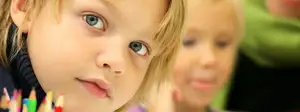
Two children, one with blonde hair and blue eyes and the other with blonde hair, are sitting next to each other in a classroom. The child with blonde hair and blue eyes is holding a pencil and appears to be looking at something. Behind her, another child is looking to the right. Both children are wearing black and purple tops. There are several pencils on the left side of the image.

Pediatric Eye Exams in Irvine

It is very important to have your children undergo regular eye exams. Pediatric eye care incorporates specialized techniques and technologies to ensure accurate testing and to help accommodate young children.

According to experts, 80% of learning is visual, so if your child has difficulty seeing clearly, his or her learning can be affected. This is especially true for infants who develop and learn about the world around them through their sense of sight. To ensure that your children have the visual resources they need to grow and develop normally, an eye doctor should check their eyes and vision at certain stages of their development.

According to the American Optometric Association (AOA), children should have their eyes examined by an eye doctor at 6 months, 3 years, at the start of school, and then every year following. If there are any signs of a vision problem or if the child has certain risk factors (such as developmental delays, premature birth, crossed or lazy eyes, family history, or previous injuries), more frequent exams are recommended. A child who wears eyeglasses or contact lenses should have his or her eyes examined yearly. Children’s eyes can change rapidly as they grow.

Pediatric Eye Exams in Irvine

It is very important to have your children undergo regular eye exams. Pediatric eye care incorporates specialized techniques and technologies to ensure accurate testing and to help accommodate young children.

According to experts, 80% of learning is visual, so if your child has difficulty seeing clearly, his or her learning can be affected. This is especially true for infants who develop and learn about the world around them through their sense of sight. To ensure that your children have the visual resources they need to grow and develop normally, an eye doctor should check their eyes and vision at certain stages of their development.

According to the American Optometric Association (AOA), children should have their eyes examined by an eye doctor at 6 months, 3 years, at the start of school, and then every year following. If there are any signs of a vision problem or if the child has certain risk factors (such as developmental delays, premature birth, crossed or lazy eyes, family history, or previous injuries), more frequent exams are recommended. A child who wears eyeglasses or contact lenses should have his or her eyes examined yearly. Children’s eyes can change rapidly as they grow.

Eyeglasses, Contacts & Other Treatments

If the eye doctor determines that your child has a vision problem, they may discuss a number of therapeutic options, such as eyeglasses or contact lenses, an eye patch, vision therapy, or Ortho-k, depending on the condition and the doctor’s specialty. Since some conditions are much easier to treat when they are caught early, while the eyes are still developing, it is essential to diagnose any eye and vision issues as early as possible.

Following the guidelines for children’s eye exams and staying alert to any signs of vision problems can help your child reach his or her potential.